
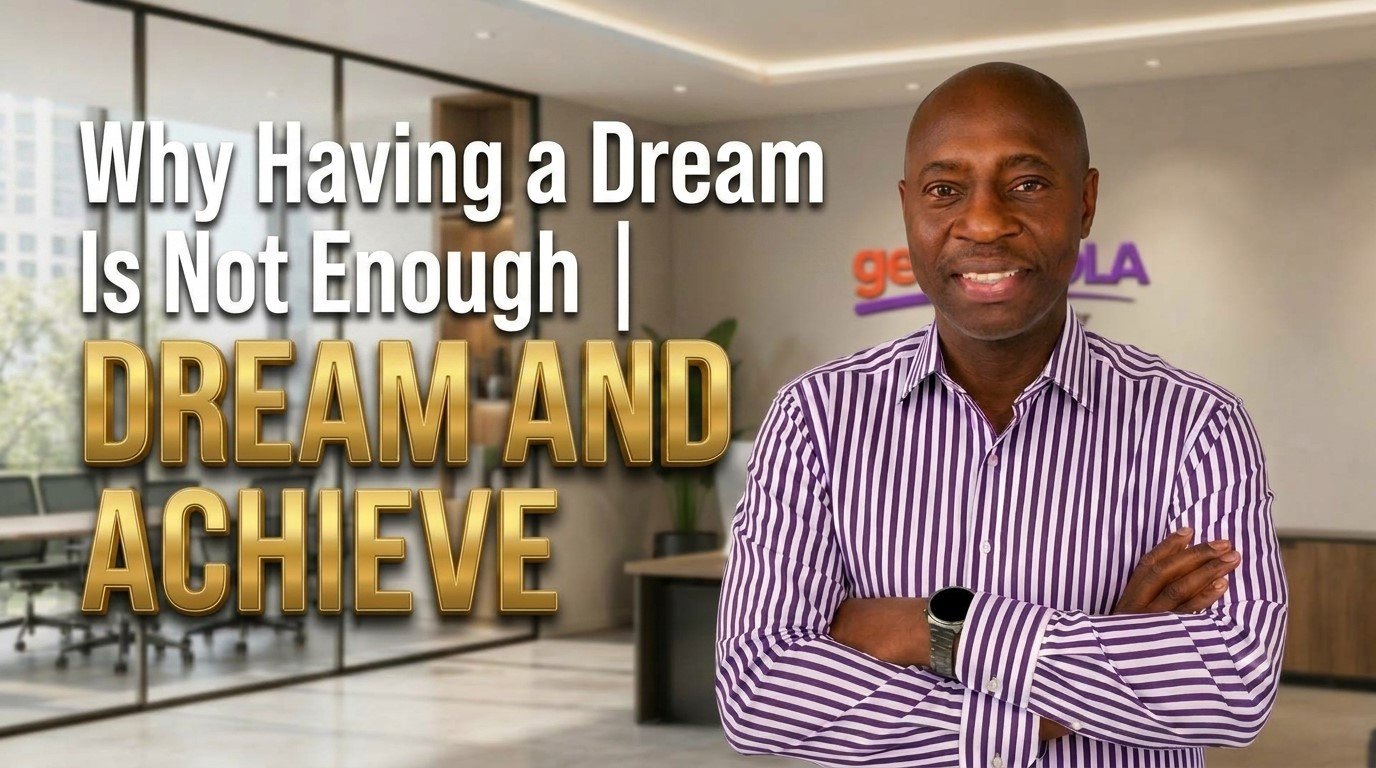
WHY HAVING A DREAM IS NOT ENOUGH
There is something about human beings that I find fascinating: we can imagine a life that does not yet exist and desire to bring it into being.
For me, that is at the heart of having a dream. A dream is more than a wish for something nice to happen. It is connected to our raison d’être; the deeper reason for which we are here and the contribution our lives are capable of making. I believe something of that desire is wired into us. The challenge is to discover it. And discovery matters because a dream that remains only inside us has not yet fulfilled its potential.
A DREAM NEEDS TO BECOME MORE THAN A DREAM
It is tempting to think that discovering our dream is enough. I do not believe it is!
The demonstration of our dream – bringing it into reality through our lives – can make the world a better place. More than that, when we dare to pursue what is within us, we can inspire other people to dare to pursue what is within them.
Marianne Williamson expresses a related idea in her reflection on our deepest fear: “Our deepest fear is that we are powerful beyond measure.” She suggests that as we allow our own light to shine, we unconsciously give others permission to do the same.
This is where I see what I call the Dream Centre: the point at which our individual dreams connect with the dreams of other people. Our dreams are not necessarily competing destinations. One person’s dream may create the opportunity for another person’s dream to flourish.
A teacher’s dream can influence a student’s. An entrepreneur’s dream can create employment for someone else’s dream. A scientist’s discovery can enable another person to solve a problem that matters deeply to them.
Achievement, therefore, can have a multiplier effect. The dream that you are brave enough to pursue may become part of someone else’s possibility.
WHY HAVING A DREAM IS NOT ENOUGH
I have observed people who seem to live without a clear sense of purpose. They can become unhappy with almost everything around them. They complain, wait and tell themselves that the circumstances are not right yet. They are waiting for the right time to start.
But the right time can become an endlessly moving target. There is always another reason to wait: more money, more confidence, more knowledge, a better job, a different environment, fewer responsibilities. Eventually, waiting becomes a way of life!
That is why I believe a dream must move. It must move from desire to thought, from thought to planning, from planning to action, and from action towards achievement.
This is the basis of the Dream → Think → Act → Achieve cycle. It is not a promise that achievement will be easy. Quite the opposite. It is a recognition that turning a dream into reality requires work.
THINKING IS PART OF THE WORK
We sometimes speak about thinking as if it were the easy part. It certainly is not! Henry Ford famously observed, “Thinking is the hardest work there is, which is the probable reason why so few engage in it.”
That is a useful reminder. Thinking is not simply allowing ideas to pass through the mind. It is examining possibilities, questioning assumptions, considering consequences and deciding what might actually work.
Planning takes this further. Planning is thinking with greater intention. It asks: What needs to happen? In what order? With what resources? What could prevent progress? What alternatives might we need?
Only then are we properly prepared for action. This is why achievement is not a stroll in the park. The dream may begin with inspiration, but achievement requires disciplined thought and deliberate action.
ACTION GIVES THE DREAM A CHANCE
There comes a point when thinking and planning must give way to doing. You can think about a dream for years and plan endlessly. But until something changes in your behaviour, the dream remains largely where it began – in your imagination.
Action is the bridge between what you can see in your mind and what can eventually exist in the world. It does not have to begin with a dramatic leap. Sometimes the first action is simply expressing the desire. This is something I consider particularly important.
BE HONEST ABOUT THE DREAM IN YOUR HEART AND DO NOT SHY AWAY FROM IT
There can be something powerful about acknowledging what you genuinely desire to do, become or contribute. Dreams acknowledged have begun the journey towards attainment and reality. Once the dream has been acknowledged, it becomes possible to think about it seriously, plan around it and begin to act.
PERSISTENCE IS MORE THAN A WORD
Then comes the part that many people underestimate: persistence. Persistence is not simply a word we attach to motivational speeches. When setbacks occur, something can change in our minds. Hope can suddenly give way to hopelessness. And at that moment, persistence can feel like the last thing available to us.
I have come to believe that persistence requires a trained mind. You need to recognise what is happening inside you and understand that the moment has called for persistence, not surrender. That does not mean blindly continuing with the same approach. Sometimes persistence means continuing towards the destination while changing the route.
CHANGING COURSE IS NOT GIVING UP
There is an important distinction between giving up and changing course. Common sense tells us that we must be able to read the signs. Some approaches have done their time while some plans no longer fit the circumstances. Even some assumptions turn out to be wrong, and sometimes the environment changes.
Changing course in response to what we have learned is not necessarily a failure of persistence. It may be an expression of it. The person committed to the dream asks not only, ‘How do I keep going,’ but also, ‘What is the situation telling me about how I should continue?’ That requires humility. It also requires observation, and the willingness to learn.
ACHIEVEMENT SHOULD MEAN MORE THAN GETTING WHAT YOU WANT
There is another question worth asking: What are we actually trying to achieve?
If achievement means simply getting everything we want for ourselves, I think we have missed something important.
For me, meaningful achievement is connected to purpose and delivers benefit beyond self. That changes the nature of the dream. It asks us to consider not only what we want to accomplish, but what difference our accomplishment can make.
This is why I believe dreams can connect through the Dream Centre. Our lives intersect.
What one person achieves can create possibilities for others. And what others achieve can make our own dreams possible. The pursuit of a dream therefore does not have to be an isolated, selfish exercise; it can become a contribution.
THE DREAM IS THE BEGINNING
Dreaming is important, but dreaming alone is not achievement. A dream gives us something to pursue. Thinking helps us understand it. Planning gives it structure. Action begins to make it real. Persistence keeps us moving when the journey becomes difficult. And sometimes, changing course helps us reach the same destination by a better route.
That is why I see Dream → Think → Act → Achieve not simply as four words, but as a cycle. This is the thinking behind Dream and Achieve, my framework for helping people think differently about dreams, purpose and meaningful achievement.
Each stage matters. A dream without thought can remain fantasy. Thought without action can remain speculation. Action without direction can become activity without meaningful progress. And achievement without purpose can leave us with the uncomfortable question: ‘What was it all for?’
The greater opportunity is to bring these elements together.
- Discover the dream
- Express it
- Think about it
- Plan for it
- Act on it
- Persist through the setbacks
- Change course when wisdom requires it
And, ultimately, seek an achievement that reflects something of your purpose and delivers benefit beyond yourself. Perhaps the most important place to begin is simply to be honest enough to acknowledge the dream that is already in your heart. Because a dream acknowledged has already taken its first step towards becoming a reality.
A QUESTION FOR YOU
What is the dream you have carried within you that you have not yet given yourself permission to pursue?
And if you have pursued your dream, what have you learned about the journey from dreaming to achievement?
I would be interested in hearing your experience.
ABOUT KOLA OLUTIMEHIN
Kola Olutimehin (getKOLA) is a Business Excellence Consultant who helps organisations achieve operational excellence through effective leadership, employee engagement, continuous improvement and organisational transformation.
If you find these reflections useful, follow Kola Olutimehin (getKOLA) for more thoughts on leadership, business excellence, organisational transformation, achievement and purposeful growth. You may also subscribe to our newsletters here, and connect with Kola via getKOLA.


Kola Olutimehin is a Business Excellence Consultant, who assists organisations in the achievement of operational excellence. He is a Director with the International Lean Six Sigma Institute (ILSSI), the David Hutchins International Quality College (DHIQC), and the Global Excellence Team (GET).
The International Lean Six Sigma Institute (ILSSI) is one of the leading international Lean Six Sigma professional and certification organisations, recognised globally. Kola’s involvement with ILSSI, DHIQC and GET reflects his continuing work in business excellence, operational excellence, quality and continuous improvement.